Share It On:
 The future of digital experiences is being redefined in real time. Understanding this shift now helps you build products that stay relevant longer.
Every decade, a new generation of users arrives and quietly dismantles the assumptions the previous one built upon. We are standing at the exact inflection point where this is happening again, except this time, the shift is faster, deeper, and far less forgiving of businesses that are slow to respond.
Gen Z is not a future demographic. They are today's customers, employees, and critics. Companies that have spent the last ten years learning to speak their language are already behind. This is because Gen Alpha, the first generation born entirely into a world of smartphones, AI assistants, and algorithmic curation, is already forming opinions about your brand, your product, and your relevance.
In the sections ahead, we explore how Gen Alpha vs Gen Z differ, and what those differences mean for businesses building digital products today.
The Next-gen Behavioral Shift That Changes Everything
Gen Z adopted technology and reshaped it. Gen Alpha has never imagined a life without it. That one distinction cascades into fundamentally different expectations around interface, trust, commerce, creativity, and identity, and building for only one of them is building for half the future.
Understanding these two cohorts begins with something far more fundamental than behavior; it begins with their relationship to technology itself. Let’s dig deeper as we establish the difference between how you should market to GenZ vs. Gen Alpha.
Adoption vs. Native Existence
Gen Z was raised in an environment where technology changed all around them. They recall a period when there was no TikTok, no stories, when every object was not smart. They embraced digital tools enthusiastically, transformed them through creativity, and created a highly complex literacy as a result of opposition. They know what the internet was like before it had everything.
How Gen Alpha uses technology does not have a comparison. They arrived in a world where voice commands work, where screens respond to touch and gesture, where the algorithm already knows what they want before they ask. They do not use technology, they live in it. It is not a subtlety. It's the foundational difference from which everything else follows.
It becomes obvious when you realize that Gen Alpha sees technology as something that is here to stay and not something to be gained, which explains why their content habits are so different from what preceded them.
Passive Scrolling vs. Participatory Experience
This is a defining moment in Gen Z vs Gen Alpha characteristics.
Gen Z consumption is all about scrolling through TikTok and Instagram Reels and YouTube Shorts: the fast-paced content stream in which the main activity is to swipe, like, or share. They are active collectors, though passive consumers to a great extent. The interface serves them content; they respond by consuming or skipping.
Gen Alpha anticipates being part of the content. Roblox, Minecraft, interactive YouTube have transformed the meaning of watching to be not a one-way flow but a collaborative experience. They don't want to watch someone play a game; they want to play alongside them. They do not desire to watch a tutorial, they need to be taken step-by-step through the tutorial in real time.
The time the user is prepared to wait before something interesting occurs naturally compresses in participatory content, and this results in pressure on attention spans.
To understand what this means in practice, the comparison needs to move beyond who the users are and into how they interact with products, platforms, and digital environments.
How to Design Platforms for Shrinking Focus Windows
The headline statistic circulating in marketing circles: Gen Alpha has an attention span of just 8 seconds—misrepresents what's actually happening. Attention hasn't disappeared; it has become selective and highly context-dependent. Gen Alpha can spend four hours on a single game. They can watch a 45-minute Minecraft “let's play” with total absorption. What they will not do is wait for something to become interesting.

The initial three seconds of any experience, opening an app, advertisement, the opening of a game, or loading of an onboarding screen now define whether one remains a permanent visitor or not. In the case of Gen Z, you had between eight to ten seconds to create value. In the case of Gen Alpha, that window has fallen further and the bar of being interesting enough to continue has been raised to new heights.
The design implication is ruthless: eliminate loading screens, remove empty onboarding steps, and surface value before the user has time to question whether they made the right choice opening your app. In the case of Gen Alpha, deferred gratification is not a design strategy but a deletion trigger.
Gen Z asks, does this work for me?
Gen Alpha asks, does this feel like me?
The gap between those two questions is where products are won and lost.
These insights directly reflect Gen Alpha vs Gen Z digital behavior, where attention is not shorter, but more selectively earned through interaction.
Product Expectations: What Users Now Expect from Tech
As user behavior evolves, so do expectations from digital products, shifting from functional efficiency to immersive, personalized experiences.
UX Expectations: Utility vs. Experience-First Design
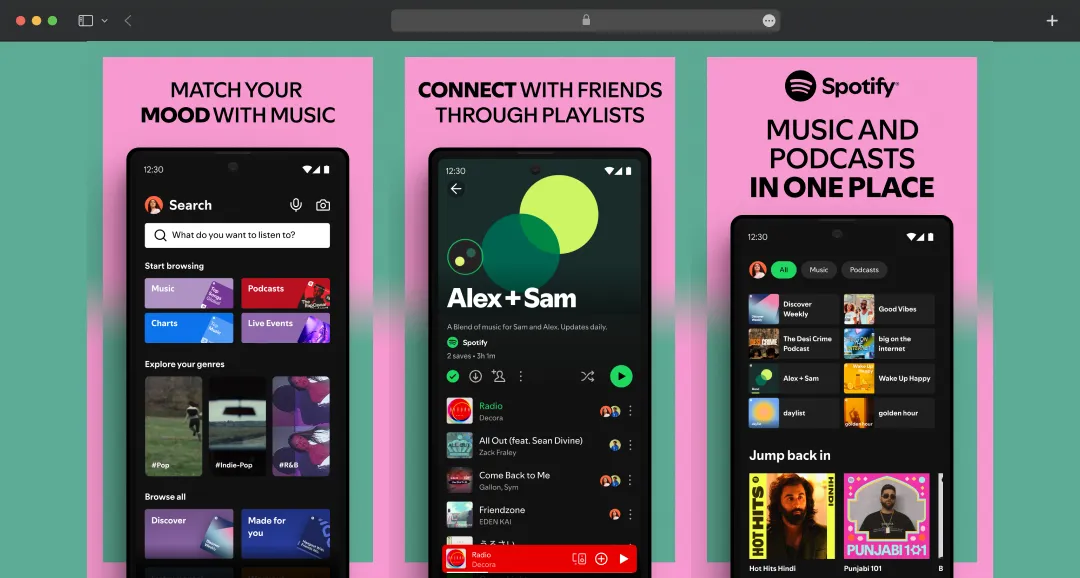
Gen Z confirmed the age of minimal design and the clean design. Products like Spotify, Notion, Linear, and Figma share a common aesthetic: purposeful whitespace, clear hierarchy, and restrained color. The interface remains in the background and allows the task to be in the limelight. The experience is utility.
Gen Alpha has been brought up with much more expressive interfaces. Roblox is noisy and disorderly. Minecraft is tactile and spatial. YouTube Kids is animated and colorful. They are not ill-constructed, they are made to suit a generation which values visual richness as an engagement and not a noisiness. In the case of Gen Alpha, the too-minimal interface does not feel elegant, but rather empty.
One rightful question arising out of the expectation of immersive experience is; whose experience? This is where AI and personalization come into the scene, serving individual users.
Personalization & AI: Enhancement vs. Default Expectation
For Gen Z, AI-powered personalization is a feature; a pleasant surprise when Spotify Discover Weekly nails it, or when Netflix's recommendation is exactly right. It is valued, even joyous, but Gen Z has lived a pre-AI life, and they can compare it to it.
The impact of AI on Gen Alpha makes them ignorant of this difference. Recommendation algorithms, adaptive learning platforms, and AI tutors are the new normal of their upbringing. To them, a product that does not understand them at all after a few interactions is not merely out of shape but it is broken. AI is not a feature, but it is the presumed infrastructure of any good product.
The threshold of being smart enough will be continually raised as Gen Alpha grows up. Goods based on inert, one-size-fits-all experiences will become more and more outdated. The question is how fast your personalization can adapt and how transparent it is about doing so.
Trust & Privacy: Skepticism vs. Supervised Environments
Gen Z has been brought up in the times of Cambridge Analytica, GDPR scandals, and the flood of viral expos on how social media platforms manipulate attention. They are also the most privacy-savvy generation to date, as well as the most tired of cookie banners, understanding that they will take them anyway. Their relationship with digital trust is complicated: skeptical in principle, pragmatic in practice.
The mediated relationship between Gen Alpha and privacy is conducted at the beginning. Parents, schools, and platforms influence the information that is shared and how, which means that this generation will not develop their own privacy values until they become old enough to stop being oversighted.
Trust shapes where each generation spends time, which platforms they choose, which worlds they inhabit, and which communities they build their identities around. Apart from this, the following factors impact their platform preferences.
Platform Preferences
The way Generation Alpha vs Gen Z chooses and engages with platforms reveals a deeper shift from consuming content to experiencing digital environments.
Social Feeds vs. Digital Worlds
The platform map of Gen Z is highly documented: TikTok to discover and have fun, Instagram is used to express oneself and dream, YouTube is used to learn in-depth, Twitter/X is used to discuss. These are content-based social networks in which users scroll, post and comment.
Gen Alpha is attracted to the three-dimensional world. Roblox, Minecraft, and Fortnite are not games to them, they are social networks that are intertwined with identity, community, and commerce. Gen Alpha spends free time in these worlds and not feeds. Their social media is spatial and experiential as opposed to documentary and reactive.
The design language of engagement changes fundamentally with the shift of feeds to worlds. Consequently, gaming is the most popular metaphor concerning how interaction should be experienced.
Gamification As an Optional Feature vs. Core Architecture
Gamification became a popular design strategy for engaging Gen Z users. Duolingo's streak mechanic, LinkedIn's profile strength meter, Fitbit's step challenges. These were effective because they borrowed gaming's motivational logic and applied it to non-gaming contexts. But for Gen Z, gamification was always a metaphor applied to something else.

For Gen Alpha, the boundary between game and non-game has dissolved. For example, Fortnite has hosted concerts and product launches. When your formative experiences blur the distinction between playing and doing, gamification stops being a design choice; it becomes the expected architecture of any engaging experience.
- Gen Alpha doesn't experience "gamification" as a feature—they notice its absence when it's missing.
- Progress mechanics, narrative arcs, and social achievement systems are baseline expectations, not enhancements.
- Products that lack reward loops will be perceived as static, unresponsive, and unengaging.
- The question for designers is no longer whether to gamify—it's how deeply to integrate game logic without making utility feel like play for play's sake.
- This changes the overall experience and how users spend money online.
| You Might Also Like: Future Technologies And Universities To Study Them
Monetization Models
How users spend reflects how they perceive value, ownership, and identity within digital ecosystems.
Ownership vs. In-Experience Spending
Gen Z made the subscription economy a norm. The concept of a subscription fee to gain continuous access has become so common that nowadays Gen Z buyers have an average of five to seven running subscriptions. They pay for access to a service over time, with the implicit expectation that the service will improve and remain valuable.
Gen Alpha’s commercial instincts are being formed on microtransactions and virtual economies, and being built on a different model. Mobile games and interactive platforms use real money to exchange in-app currency to unlock skins, accessories and experience upgrades. These products are intangible and have no established physical resale value, but they can be high social capital. Gen Alpha will consume a virtual object not because it is a digital object, but due to the meaning of this object in common digital environments.
| Aspect | Gen Z | Gen Alpha |
|---|---|---|
| Spending Model | Subscription-based | Microtransactions & virtual economies |
| Purchase Behavior | Planned, recurring payments | In-the-moment, impulse-driven |
| Value Perception | Functional utility over time | Social signaling within digital spaces |
| Loyalty | Based on consistent value and pricing | Based on experience and identity expression |
| Ownership Mindset | Access to services | Presence and status in digital environments |
Influencer & Creator Impact
Social media marketing drives exceptional results for businesses, with 69% of consumers trusting influencer recommendations over brand messaging. Here’s how that works across GenZ and GenAlpha customers:
Passive Following vs. Active Co-Creation
The attitude of GenZ towards creators is admiring and parasocial. They subscribe, they observe, they purchase the products suggested. However, the relationship per se is unidirectional. The creator is a trusted peer who has a magnified reach, the follower is a viewer. It should be genuine however, if GenZ is able to sense an imposed sponsorship even across the algorithm and will lose trust immediately.
The creators have a closer and more impactful relationship with Gen Alpha. They interact with real-life, short-form content on YouTube, Tik Tok, and gaming platforms, where the creators are seen as more of a peer than a personality. Almost fifty percent of GenAlpha rely on influencers to an equal or greater degree as they do their friends and more than fifty percent of Gen Alpha consumers have purchased products or services on the recommendation of creators.
- Brand campaigns that only target influencer audiences are reaching Gen Z, not Gen Alpha.
- Gen Alpha influence flows through participation: game worlds, collaborative builds, remixable content.
- Creator tools and UGC (user-generated content) platforms will be the most powerful marketing infrastructure for this generation.
The creator influence does not exist in a vacuum, rather it is influenced by the location and manner in which these interactions occur. The devices that facilitate the experiences of immersion and participation, as they become more engaging and interactive, are as crucial as the platforms themselves.
Device Ecosystem
User behavior is no longer tied to a single screen. The way each generation interacts with devices reflects how they expect digital experiences to function: seamlessly, continuously, and without disruption.
Mobile-First vs. Multi-Device Native
GenZ's device story is the smartphone story. Everything converged on the phone: camera, music, social, banking, navigation and communication. Mobile-first design became the industry standard because GenZ lived mobile-first lives. The phone was the primary screen, and everything else was secondary.
Gen Alpha's device relationship is more fluid and simultaneous. They move between tablet, phone, smart TV, game console, smart speaker, laptop, and increasingly AR/VR headsets without thinking about it as transitions. They expect their experience to be continuous across all of these, their game state persists, their playlist continues, their identity travels with them. Device-agnostic design is not a future technology trend; for Gen Alpha, it's the current expectation.
The device ecosystem shapes how brands need to show up, which raises the final behavioral dimension: what Gen Alpha expects from the brands themselves. As experiences move fluidly across devices, the expectations from brands evolve as well. It’s no longer just about where users engage, but how brands fit into those experiences.
Brand Expectations
User expectations don’t stop at products—they extend to how brands behave, engage, and become part of everyday digital experiences.
Authenticity vs. Entertainment-Led Engagement
GenZ demanded that brands be real. Less polish, more honesty. Behind-the-scenes content, founder-led social, values-aligned messaging. The worst thing a brand could do for GenZ was feel corporate and calculated—they rewarded brands that felt human, even imperfect. Wendy's Twitter, Duolingo's TikTok, Patagonia's environmental politics, are all examples of brands succeeding by dropping the brand mask.
Gen Alpha isn't looking for authenticity in the same way; they're looking for entertainment. Their formative brand interactions are happening in Roblox worlds, YouTube sponsor reads, and creator collaborations. A brand that builds a fun game world in Roblox is a good brand. A brand that shows up in a creator's video they love is a trusted brand. The relationship is built through experience, not communication.
All of this context: behavioral, psychological, social, technological converges into a single question: how do you actually build for Gen Alpha?
How to Build for Gen Alpha
The creation of platforms to serve Gen Alpha needed to be constructed. In this generation, speed, interactivity and intelligence are not being valued, but rather assumed. In the case of businesses, it implies the move from feature optimization to creating ecosystems that are immediate, responsive, and socially alive, even on the first touchpoint.
Turning Insight into Strategy
Understanding a generation is only valuable if it changes what you build. The following principles are not trends; they are structural requirements for any product that intends to be relevant as Gen Alpha comes of age and gains purchasing power over the next decade.
- Design for zero friction at first contact. Your first three seconds determine everything. Remove loading delays, skip registration walls, and surface core value immediately. For Gen Alpha, patience is not a behavior, it is an error state.
- Build interactivity into the architecture, not as a layer. Participation should be the default state of any experience. Passive consumption is not engagement, it is acceptable waiting. Every product surface should have an action available.
- Make AI adaptive, not announced. Gen Alpha doesn't want to know you have AI. They want the product to just know them. Build personalization that operates invisibly and adapts continuously without requiring explicit user input.
- Design for co-presence and shared experience. The most powerful features for Gen Alpha will be things you do with others, not things you consume alone. Shared spaces, real-time collaboration, and communal progress mechanics will outperform individual features.
- Gamify at the system level. Don't bolt on a badge. Build a progression architecture: levels, narrative, collective goals, and status signals embedded throughout the product experience from day one.
- Build virtual economies with intentionality. Gen Alpha will spend real money on virtual items. Design your in-experience economy with care; perceived fairness, social value, and brand reputation all depend on how it operates.
- Start with parents to reach the child. Any product targeting users under 13 must earn trust at the family level first. Safety, transparency, and parental controls are the gateway to Gen Alpha's long-term loyalty.
- Design for device fluidity. Your product should feel identical and continuous whether it's on a phone, tablet, TV, or headset. State, progress, and identity must travel seamlessly across every screen.
If you’re planning on creating a platform or a product that is more focused towards a younger audience, here are a few things to consider.
Key Takeaways for Businesses
Gen Alpha doesn't arrive in the market as an abstract future demographic, they are here now, forming habits, building loyalties, and establishing expectations. The businesses that win with them will be the ones that started adapting years before the money materialized.
- The UX Floor Has Risen: What delighted Gen Z is the baseline for Gen Alpha. Speed, personalization, and interactivity are no longer differentiators—they are entry requirements.
- AI Is Infrastructure, Not a Feature: Products without adaptive, personalized AI will feel broken to Gen Alpha. Start building intelligence into the product core now, not as an add-on later.
- Games Are the New Platforms: Roblox and Fortnite are media channels, retail environments, and social platforms simultaneously. Ignoring them is equivalent to ignoring TikTok five years ago.
- Earn Parent Trust First: Every brand relationship with Gen Alpha is mediated by a parent or guardian. Products that fail the safety and transparency test for families don't get a second chance.
- Virtual Value Is Real Value: Digital items, virtual currencies, and in-game status carry genuine economic and emotional weight. Build your commerce strategy around experiential spending, not just product ownership.
- Co-Presence Over Content: The most durable experiences for Gen Alpha will be shared ones. Design for doing-together, not consuming-alone. The social layer is the product.
| You Might Also Like: Grow your business the right way with these key marketing strategies
Conclusion
While Gen Z adapted to evolving platforms, Gen Alpha is defining a world where technology is effortless, smart, and highly interactive by default. This also explains why Gen Alpha is more tech advanced than Gen Z.
The difference between Gen Z usage of technology and Gen Alpha usage of technology is an indication of the shift in digital behavior, expectations, and engagement models. Such a disparity between Gen Z and Gen Alpha in terms of technology adoption is already affecting product design, monetization approaches, and platform ecosystems.
More importantly, the effects of AI on Gen Alpha, along with immersive experiences and multi-devices, give us an idea of the future trends in tech. Companies that identify these changes early will be in a better position to keep pace with how future consumers are going to behave.
Frequently Asked Questions
What is the difference between Gen Z and Gen Alpha in technology use?
The difference between Gen Z and Gen Alpha in technology use comes down to exposure and expectations. Gen Z grew alongside evolving platforms and learned to adapt, while Gen Alpha is born into fully developed digital ecosystems. This makes their expectations higher, especially around speed, personalization, and interactivity in everyday digital experiences.
How do Gen Z and Gen Alpha use technology differently?
Looking at how Gen Z uses technology versus how Gen Alpha uses technology reveals a clear shift. Gen Z primarily engages through social media and content consumption, while Gen Alpha prefers interactive, participatory platforms like gaming environments. This marks a transition from passive usage to more immersive and experience-driven digital behavior.
Why is Gen Alpha considered more tech advanced than Gen Z?
Gen Alpha is often seen as more tech advanced than Gen Z because they are growing up with AI, automation, and connected devices as standard. Unlike Gen Z, they don’t see technology as something new or evolving—it’s simply part of their environment, which shapes more intuitive and expectation-driven usage patterns from an early age.
What role does AI play in shaping Gen Alpha’s behavior?
AI plays a central role in shaping what is Gen Alpha’s digital behavior. Personalized recommendations, adaptive learning, and smart interfaces are not optional features for them—they are expected. This reliance on AI is influencing how they interact with platforms, making their experiences more tailored, predictive, and seamlessly integrated into daily life.
How is Gen Alpha influencing the future of technology and consumer behavior?
Gen Alpha is already influencing the future of technology through its preference for immersive, interactive, and socially connected experiences. Their behaviors are shaping how products are designed and how brands engage users. As they grow, the Gen Alpha future consumer behavior, will push businesses toward more dynamic and experience-led digital ecosystems.

Uncover executable insights, extensive research, and expert opinions in one place.
Related Content